
Differentiating Intuition From Fear: How to Understand Your Inner Signals
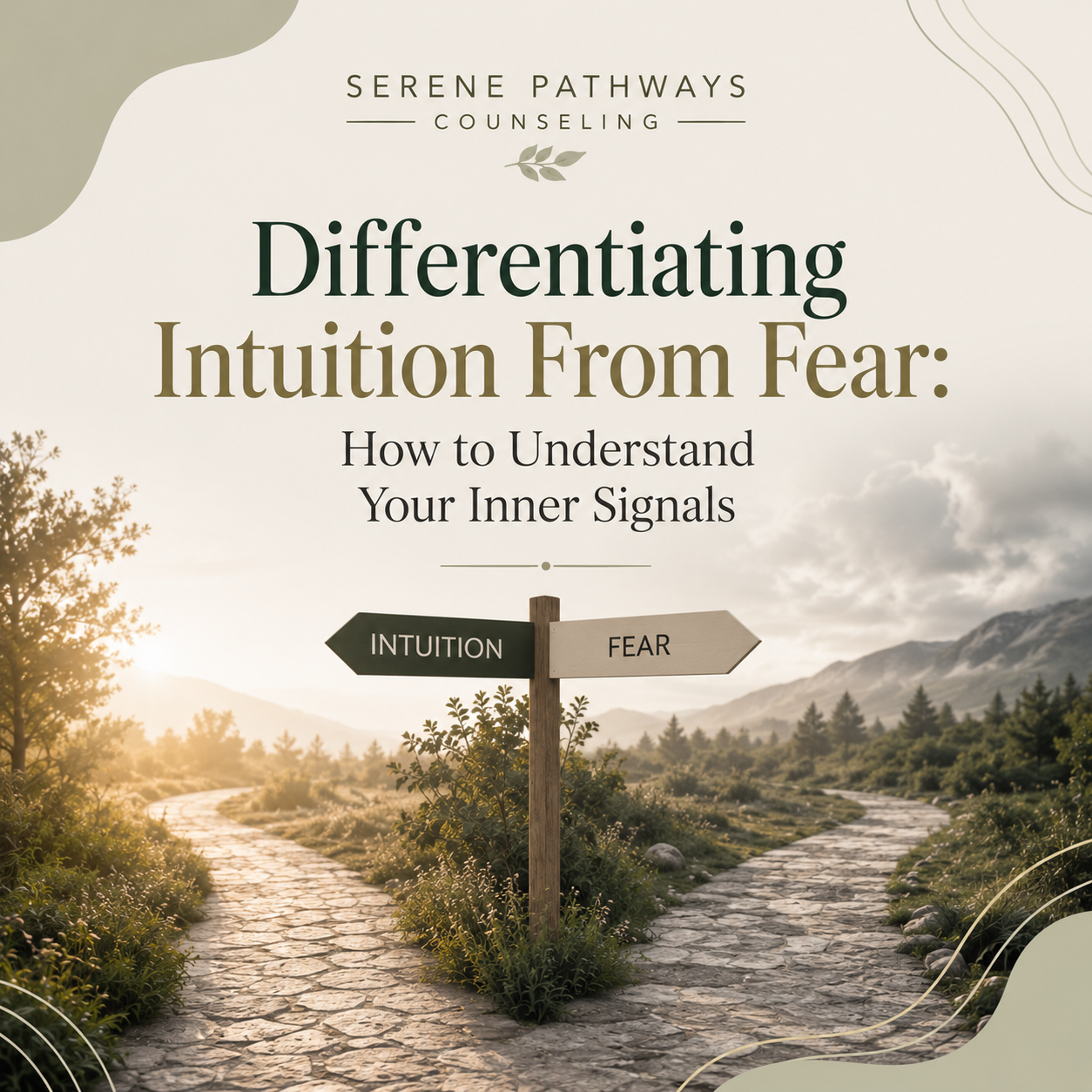
Is It Intuition or Fear?
Have you ever had a strong feeling about something but could not explain why?
Maybe you suddenly felt that something was not right.
Or perhaps you wanted to walk away from a situation because something inside you said, "Don't do this."
But sometimes anxiety can feel just as convincing.
Fear can tell you something is wrong even when you are actually safe.
So how do you know the difference?
What Is Intuition?
Intuition is often described as a quiet sense of knowing.
It does not always come with a detailed explanation.
You may simply notice:
"Something about this doesn't feel right."
Intuition can develop from your experiences, observations, memories, and ability to recognize patterns, sometimes before you consciously understand what you are noticing.
It can feel calm, clear, or steady.
What Is Fear?
Fear is your brain and body's response to a perceived threat.
Sometimes the threat is immediate and real.
Other times, your nervous system reacts to uncertainty, past experiences, or imagined possibilities.
Fear may sound like:
"What if something goes wrong?"
"What if they leave?"
"What if I regret this?"
"I need to fix this right now."
Fear often wants certainty.
And when certainty is unavailable, it may create more and more scenarios to analyze.
Intuition Is Often Quiet. Fear Can Be Loud.
One useful distinction is the quality of the experience.
Intuition may feel like a steady internal signal.
Fear can feel urgent, repetitive, and overwhelming.
For example:
Intuition:
"I don't think this situation is right for me."
Fear:
"Something terrible is going to happen. I need to get out right now. What if I made the wrong decision?"
The difference is not always obvious, but noticing the tone of your thoughts can provide useful information.
Fear Often Wants an Immediate Answer
When we are afraid, we may feel pressure to act immediately.
We want reassurance.
We want certainty.
We want to know exactly what will happen.
But not every decision requires an immediate answer.
If you can safely pause, giving yourself time to settle can help you determine whether you are responding to a genuine concern or an anxious prediction.
Your Past Experiences Matter
Sometimes what feels like intuition is actually a learned fear response.
For example, if you have experienced betrayal in the past, you may become highly alert to signs that someone might hurt you again.
Your brain is trying to protect you.
That does not mean your feelings are wrong.
It means they deserve curiosity rather than automatic obedience.
Ask yourself:
"Is this feeling responding to what is happening now, or does it remind me of something that happened before?"
Look for Evidence Without Dismissing Your Feelings
You do not have to choose between trusting yourself and thinking logically.
You can do both.
If something feels wrong, pause and ask:
What am I noticing?
What facts support my concern?
What facts might challenge it?
Am I reacting to something happening now?
Am I predicting what might happen?
Have I felt this way in similar situations before?
This allows you to respect your emotions while also checking the facts.
Try the Pause
When you are unsure whether you are experiencing intuition or fear, give yourself a moment.
Take a few slow breaths.
Notice what is happening in your body.
Then ask:
"If I were completely safe right now, what would I notice?"
You may discover that your initial reaction changes once your nervous system settles.
You Do Not Have to Ignore Fear
Fear is not your enemy.
It can alert you to potential danger, encourage caution, and help you protect yourself.
The goal is not to eliminate fear.
It is to understand what it is communicating.
Sometimes fear is telling you to pay attention.
Sometimes it is reminding you of an old wound.
Learning which one you are experiencing takes practice.
You Can Trust Yourself Without Acting on Every Feeling
Self-trust does not mean believing every thought or following every feeling immediately.
It means knowing that you can pause, reflect, gather information, and make a decision that feels aligned with your values.
You can listen to yourself without being controlled by fear.
When Anxiety Makes It Difficult to Tell the Difference
If fear or anxiety regularly influences your decisions, relationships, or daily life, it may be helpful to explore these patterns with a mental health professional.
Therapy can provide a safe space to understand where your reactions come from and develop healthier ways of responding to uncertainty.
Closing Reflection
The next time you have a strong feeling, you do not have to immediately label it as intuition or fear.
Pause.
Listen.
Get curious.
Ask yourself:
"What is this feeling trying to tell me, and what evidence do I have?"
You can honor your inner experience while giving yourself the time and space to respond thoughtfully.
💬 If anxiety, uncertainty, or trusting yourself has become difficult, therapy can help you better understand your emotional patterns and build greater confidence in your decisions.
👉 https://www.serenepathways.com/therapy
🆓 Get started with our FREE Mental Wellness Workbook + Therapy-Themed Affirmation Cards and Find the Right Therapist for You:
👉 https://www.serenepathways.com/free-offerings
📍 11800 Central Ave, Suite 225, Chino, CA
📞 909-591-5085 | 📧 Stuartkaplowitz@serenepathways.com
#MentalHealth #Intuition #AnxietySupport #SelfAwareness #EmotionalWellness #SelfTrust #Mindfulness #MentalHealthMatters #TherapySupport #SerenePathways